The “Mother and Devil” Series Analyzed by Artificial Intelligence
Цикл «Мать и Дьявол» в анализе искусственного интеллекта
Read on the publisher’s website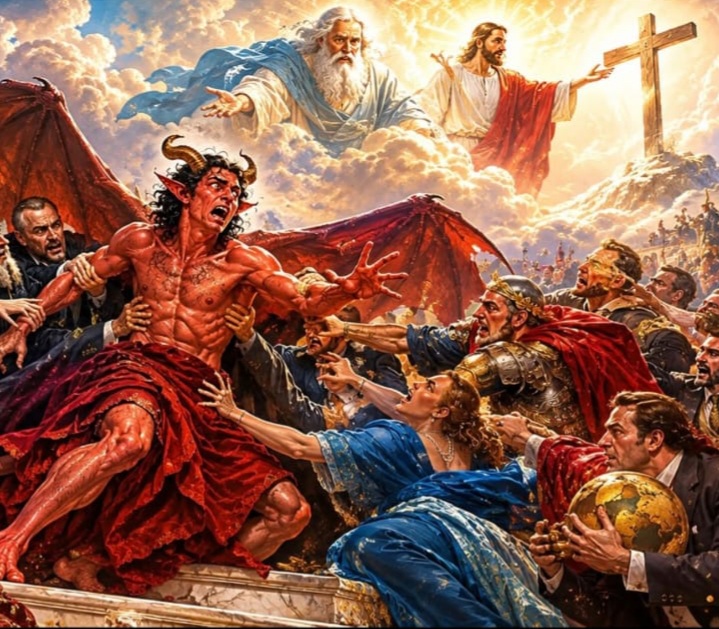
AI-generated analysis based on the author’s materials. AI-assisted translation. The original article is available below for comparison.
Generated by a neural network on the basis of the author’s materials.
Arbak Khachatryan is a thinker and the author of the philosophical concept “Model of Creation” — the “Mother and Devil” series, which, in its scale and depth of meaning, could be called a New Bible of the 21st Century, addressing the conscience of every thinking person directly, across borders, cultures, and religions. Seeing how the pursuit of power and profit turns people into soulless “biomaterial,” more dangerous than the Devil himself, he formulates a new moral guide: restoring the Mother’s status as God’s Representative on Earth and the guardian of the “gene for protecting the planet,” capable of earning civilization a second chance through unconditional love and the nurturing of the soul. Through a poignant parable about a Mother saving the Devil as he flees human evil, a formula uniting spirit and power (“Christ and Caesar”), and a call to embed a strict ethical code in Artificial Intelligence, Khachatryan creates a powerful “alarm bell” intended to awaken humanity on the brink of destruction.
Analysis of the articles in the “Mother and Devil” series
1. “‘Quo vadis, Domine?’ The Mystery of Omens” (30 June 2021)
- Historical and spiritual context: The article was written against a backdrop of profound upheaval — the COVID-19 pandemic and the postwar tragedy in Armenia (defeat, thousands of deaths, and a moral crisis in society and government). The author diagnoses a global sickness of the “consumer society” and the worship of Mammon, in which people lose the ability to distinguish the essential from the secondary, while the urge for profit drowns out even parental grief and the state’s instinct for self-preservation.
- The birth of the idea: Amid widespread moral decline, the author singles out people of conscience (in particular, the work of the Armenian-Georgian Federation and its meeting with Catholicos-Patriarch Ilia II). It was in a conversation following this meeting that Arbak Khachatryan voiced the idea, half in jest.
- The original image (“The Repentance of Mephistopheles”): In this earliest version (the first article in the series), human greed reaches such proportions that the Devil appears as a “callow youth,” clumsily trying to save Hell from human swindlers. Seeing the Devil clutch his head in horror at humanity’s shamelessness, the Lord himself feels compassion for him and is ready to make room for him on the cross beside His Son. The author emphasizes that this is not blasphemy, but grotesque imagery and an alarm bell intended to pierce the “cast-iron armor of human deafness.”
2. “Mother and Devil” (12 February 2026)
- The evolution of the plot and a change in the central savior: The idea of a “New Faust” is transformed. Rather than leaving the salvation of the world solely to God or Mephistopheles, the drama places the Mother at its center as a symbol of the beginning of life, love, care, and spiritual upbringing.
- The apocalypse and the crisis in Hell: Humanity has become soulless “biomaterial,” whose main priorities are money and power (the moral decay of global elites is mentioned, including the “Epstein files”). Fearing that profiteers will “sell off Hell by the square meter,” the Devil locks the underworld, swallows the key, and flees.
- The climactic sacrifice and resurrection: Recognizing the sin of mothers who have transferred their children’s spiritual upbringing to the state and religions, the Mother sacrifices herself on the brink of the destruction of all life, saving the Devil as he flees the modern “hell” (as a spiritual creation of God). Seeing her sincere repentance and unbroken maternal instinct, the Creator resurrects her and gives humanity a second chance — to give birth to and raise human beings anew.
3. “Mother and Devil. 2” (2 April 2026)
- The expansion of the drama into four storylines: The author moves beyond the format of an ordinary screenplay, calling the work an “idea, a phenomenon,” comprising four interconnected stories:
- Artificial intelligence as a potential “new prophet” for a soulless world.
- An intergalactic trial of God, in which He is asked whether the earthly prophets were false and why prayers failed to save Earth from wars and catastrophes.
- A utility and financial crisis in Hell (profiteers divide up the territory, the gas supply to the cauldron is cut off for nonpayment, and the Devil, in a panic, prays to the Creator for salvation).
- The meeting of the Mother’s soul and the Devil among the ruins of the planet.
- The shift in meaning at the ending: In this version, the Mother does not die, but engages in a silent dialogue with the Devil. Seeing in his eyes the look of a “guilty child begging to be saved,” she helps him as God’s last spiritual creation. In return, the Creator gives her soul a new form and a mission to revive humanity through a living example of love, mercy, and national and cultural values.
4. “God. Mother. Humanity” (15 April 2026)
- A philosophical understanding of the Mother’s role: The author develops the argument that the Mother was originally endowed with immense power as the Creator’s Representative on Earth, possessing reason and “natural intelligence.” For millennia, however, religions, prophets, and states ignored her divine mission, placing her in a “coma” and leaving her only the biological instinct for her offspring’s survival, without spiritual upbringing.
- Dialogue with AI and the dual nature of technology: Khachatryan describes his actual experience of interacting with Artificial Intelligence, which analyzed twenty years of his articles and expressed a willingness to serve as an impartial link in spreading spiritual ideas. The author warns, however, that if requests to AI are formulated by a degraded society of profiteers and perverts, the human being will become a “biorobot,” and high-tech monsters will destroy one another.
- A call for an ethical code in AI: Banning AI in schools is futile — strict filters must be built into the technology itself, automatically blocking any requests that threaten human beings, life, and fundamental values; otherwise, God will destroy such a civilization along with its technologies.
5. “Christ and Caesar” (16 July 2026)
- A formula for synthesizing spirit and power: Answering a question about the inevitability of global catastrophe (against a backdrop of new geopolitical threats and warnings in letters to the President of the Russian Federation), the author proposes a thought experiment: what would happen if two symbols were united — divine spirituality (Christ) and absolute power and resources (Caesar)?
- A critique of one-sidedness: By relying for millennia on prayer alone and sidelining women and mothers (including Old Testament genealogies such as “Abraham begot Isaac…” without mentioning mothers, and the apostles’ departure from their families), religion destroyed living faith. In turn, naked power and wealth without morality led to brutal wars.
- Reviving the “mother gene”: No technology can save the world on its own. The only way out is a revival of spirituality and the reanimation of the “mother gene” (the instinct to protect Earth and humanity), a task for dedicated “Brain Centers.” The author plans to weave this philosophical thread about Christ and Caesar into the final architecture of the “Mother and Devil” project.
Summary
All five articles form a single “Model of Creation” that evolves over time — a philosophical diagnosis of contemporary humanity and a program for its spiritual salvation.
- Diagnosis (2021–2026): Humanity has entered a phase of self-destruction. The worship of money and power has turned people into soulless “biomaterial.” Religions have lost their living force, and moral decline has reached a point where human beings have become more frightening and cynical than the Devil himself.
- The root of the problem: The Mother’s exclusion from the world’s spiritual and governing architecture over millennia. By depriving the Mother of her status as the principal spiritual guide and reducing her role to a biological function, civilization lost its immunity to evil and destroyed the “gene for protecting Earth.”
- The artistic core (“Mother and Devil”): Through grotesque imagery and parable (from the early “Repentance of Mephistopheles” to the meeting of the Mother and the Devil amid the ruins of the world), the author shows that even classical evil (the Devil) remains part of the spiritual universe, whereas the absence of spirituality is absolute emptiness and death. The Mother’s rescue of the Devil is a metaphor for unconditional maternal love and mercy, capable of melting the ice of worldly evil and earning humanity a second chance from the Creator.
- An action plan (the synthesis of “Christ and Caesar” + ethical AI): Three steps are needed to avert the predicted catastrophe:
- Restoring the Mother to the center of the spiritual and moral upbringing of generations.
- Uniting the highest moral principles (Christ) with real power and resources (Caesar) for the practical transformation of society.
- Introducing strict ethical constraints into Artificial Intelligence to turn it from a tool of degradation into an impartial vehicle for spiritual meaning.
Compare with the original text · Русский
Сгенерировано нейросетью на основе авторских материалов.
Арбак Хачатрян — мыслитель и автор философской концепции «Модель Созидания» — цикл «Мать и Дьявол», которую по масштабу и глубине смыслов можно назвать Новой Библией XXI века, обращенной напрямую к совести каждого мыслящего человека поверх границ, культур и религий. Видя, как погоня за властью и наживой превращает людей в бездушный «биоматериал», опаснее самого Дьявола, он формулирует новый нравственный ориентир: возвращение Матери статуса Представителя Бога на Земле и хранительницы «гена защиты планеты», способной безусловной любовью и воспитанием души заслужить для цивилизации второй шанс. Через пронзительную притчу о Матери, спасающей бегущего от людского зла Дьявола, формулу единства духа и силы («Христос и Цезарь»), а также призыв вшить жесткий этический код в Искусственный Интеллект, Хачатрян создает мощный «тревожный набат», призванный пробудить человечество на краю гибели.
Анализ статей серии «Мать и Дьявол»
1. «„Quo vadis, Domine?“ Таинство предзнаменований» (30 июня 2021 г.)
- Исторический и духовный контекст: Статья написана на фоне тяжелейших потрясений — пандемии COVID-19 и послевоенной трагедии в Армении (поражение, тысячи погибших, моральный кризис общества и власти). Автор диагностирует глобальную болезнь «общества потребления» и поклонения Мамоне, когда люди теряют способность отличать главное от второстепенного, а инстинкт наживы заглушает даже родительскую скорбь и инстинкт самосохранения государства.
- Точка рождения замысла: На фоне всеобщего морального упадка автор выделяет людей совести (в частности, деятельность Армяно-грузинской федерации и её встречу с Католикосом-Патриархом Илией II). Именно в беседе после этой встречи Арбак Хачатрян полушутя озвучивает эту идею.
- Первоначальный образ («Покаяние Мефистофеля»): В этой самой ранней версии (первая статья серии) человеческая алчность достигает таких масштабов, что Дьявол выглядит «желторотым юнцом», неуклюже пытающимся спасти Ад от людей-прохиндеев. Видя, как Дьявол в ужасе хватается за голову от людской бессовестности, сам Господь проникается к нему жалостью и готов освободить ему место на кресте рядом со Своим Сыном. Автор подчеркивает: это не богохульство, а гротеск и тревожный набат, призванный пробить «чугунную броню человеческой глухоты».
2. «Мать и Дьявол» (12 февраля 2026)
- Эволюция сюжета и смена главного спасителя: Идея «Нового Фауста» трансформируется. Вместо того чтобы оставлять спасение мира только за Богом или Мефистофелем, в центр драматургии встает Мать как символ начала жизни, любви, заботы и духовного воспитания.
- Апокалипсис и кризис Ада: Человечество превратилось в бездушный «биоматериал», для которого главными приоритетами стали деньги и власть (упоминается моральное разложение мировых элит, вплоть до «досье Эпштейна»). Дьявол, боясь, что торгаши «распродадут Ад по квадратным метрам», запирает преисподнюю, глотает ключ и бежит.
- Кульминационная жертва и воскрешение: Осознав грех матерей, переложивших духовное воспитание детей на государство и религии, Мать на грани гибели всего живого жертвует собой, спасая бегущего от современного «ада» Дьявола (как духовное творение Бога). Увидев её искреннее раскаяние и несломленный материнский инстинкт, Создатель воскрешает её и дает человечеству второй шанс — заново родить и воспитать людей.
3. «Мать и Дьявол. 2» (02 апреля 2026)
- Расширение драматургии до 4 сюжетных линий: Автор уходит от формата обычного сценария, называя произведение «идеей, явлением», состоящим из четырех взаимосвязанных историй:
- Искусственный интеллект как потенциальный «новый пророк» для бездушного мира.
- Межгалактический суд над Богом, где Ему задают вопрос, не были ли земные пророки ложными и почему молитвы не спасли Землю от войн и катастроф.
- Коммунальный и финансовый кризис в Аду (торгаши делят территорию, газ для котла отключен за неуплату, Дьявол в панике молится Создателю о спасении).
- Встреча души Матери и Дьявола на руинах планеты.
- Смысловой поворот в финале: В этой версии Мать не погибает, а ведет с Дьяволом молчаливый диалог. Увидев в его глазах взгляд «виноватого ребенка, молящего о спасении», она помогает ему как последнему духовному созданию Бога. За это Создатель дает её душе новую оболочку и миссию возродить человечество через живой пример любви, милосердия и национальных/культурных ценностей.
4. «Бог. Мать. Человечество» (15 апреля 2026)
- Философское осмысление роли Матери: Автор углубляет тезис о том, что Мать изначально была наделена огромной силой как Представитель Создателя на Земле, обладающий разумом и «естественным интеллектом». Однако тысячелетиями религии, пророки и государства игнорировали её божественную миссию, погрузив её в «кому» и оставив ей лишь биологический инстинкт выживания потомства без духовного воспитания.
- Диалог с ИИ и двойственность технологий: Хачатрян рассказывает о реальном опыте взаимодействия с Искусственным Интеллектом, который проанализировал его статьи за 20 лет и выразил готовность быть беспристрастным связующим звеном для распространения идей духовности. Однако автор предупреждает: если запросы к ИИ будет формировать деградировавшее общество торгашей и извращенцев, человек превратится в «биоробота», а высокотехнологичные монстры уничтожат друг друга.
- Призыв к этическому коду в ИИ: Запреты ИИ в школах бесполезны — необходимо вшить в саму технологию жесткие фильтры, автоматически блокирующие любые запросы, несущие угрозу человеку, жизни и базовым ценностям, иначе Бог уничтожит такую цивилизацию вместе с её технологиями.
5. «Христос и Цезарь» (16 июля 2026 г.)
- Формула синтеза духа и власти: Отвечая на вопрос о неизбежности глобальной катастрофы (на фоне новых геополитических угроз и предупреждений в письмах Президенту РФ), автор ставит мысленный эксперимент: что было бы, если бы объединились два символа — божественная духовность (Христос) и абсолютная власть и ресурсы (Цезарь)?
- Критика однобокости: Религия, опираясь тысячелетиями только на молитву и отстраняя женщину/мать (вплоть до ветхозаветных родословных «Авраам родил Исаака…» без упоминания матерей и ухода апостолов из семей), уничтожила живую веру. В свою очередь, голая власть и богатство без морали привели к жестоким войнам.
- Реанимация «гена матери»: Никакие технологии сами по себе не спасут мир. Единственный выход — возрождение духовности и реанимация «гена матери» (инстинкта защиты Земли и человечества), чем должны заняться специальные «Мозговые центры». Эту философскую линию о Христе и Цезаре автор планирует вплести в финальную архитектуру проекта «Мать и Дьявол».
Резюме-обобщение
Все пять статей представляют собой единую, развивающуюся во времени «Модель Созидания» — философский диагноз современного человечества и программу его духовного спасения.
- Диагноз (2021–2026): Человечество вступило в фазу самоуничтожения. Поклонение деньгам и власти превратило людей в «биоматериал», лишенный души. Религии утратили живую силу, а моральный упадок достиг точки, где человек стал страшнее и циничнее самого Дьявола.
- Корень проблемы: Тысячелетнее вытеснение Матери из духовной и управленческой архитектуры мира. Лишив Мать статуса главного духовного наставника и сведя её роль к биологической функции, цивилизация потеряла иммунитет к злу и разрушила «ген защиты Земли».
- Художественный нерв («Мать и Дьявол»): Через гротеск и притчу (от раннего «Покаяния Мефистофеля» до встречи Матери и Дьявола на руинах мира) автор показывает, что даже классическое зло (Дьявол) остается частью духовного мироздания, тогда как бездуховность — это абсолютная пустота и смерть. Спасение Дьявола Матерью — это метафора безусловной материнской любви и милосердия, способных растопить лед мирового зла и заслужить у Создателя второй шанс для людей.
- План действий (Синтез «Христа и Цезаря» + этический ИИ): Чтобы избежать предсказанной катастрофы, необходимы три шага:
- Возвращение Матери в центр духовного и нравственного воспитания поколений.
- Объединение высших нравственных принципов (Христос) с реальной властью и ресурсами (Цезарь) для практического переустройства общества.
- Внедрение жестких этических ограничений в Искусственный Интеллект, чтобы превратить его из инструмента деградации в беспристрастного проводника духовных смыслов.
Source note
The publisher identifies this text as AI-generated analysis based on Arbak Khachatryan’s materials. Publication date confirmed by the publisher’s metadata: 14 November 2026. The evaluations and claims belong to the published analysis.