Times change; eternity remains unchanged
Времена меняются, вечность неизменна
Read on the publisher’s website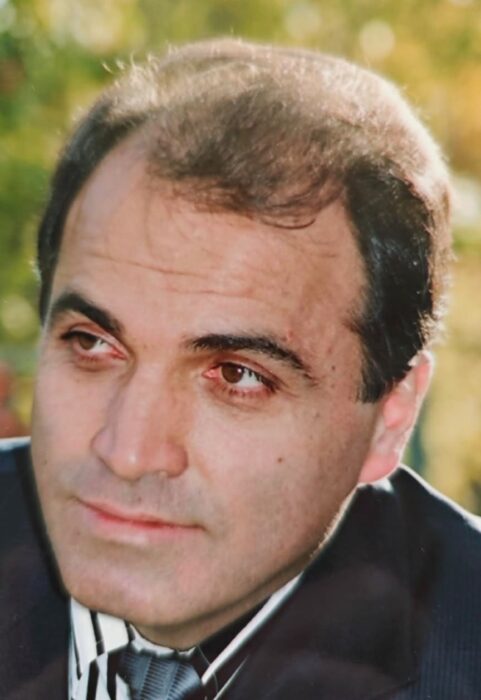
AI-assisted translation. The original article is available below for comparison.
We are once again speaking with political analyst and friend of our editorial staff Arbak Khachatryan, who is known for his accurate forecasts. Our discussion concerns developments in the situation in the South Caucasus.
Mr. Khachatryan, in response to members of the Federation for the Protection of Intellectual Property putting forward your candidacy for prime minister of the Republic of Armenia, you recently explained to members of the press not only that you were withdrawing, but also why this nomination was inappropriate in view of implementing the new model of state governance you had presented. Please explain what new model you mean.
— The imperfections of the existing model of governance, its bias, and the way it reflects the interests of only a narrow circle have been discussed repeatedly. Different sections of society at different times have preferred presidential, semi-presidential, or parliamentary government. Drawing on the exceedingly rich repertoire of a bribe-taker I know, who adapted a well-known mathematical formula in his own way and made it his life's credo, I too must note that “changing the order of the addends—the authorities—does not change the sum—the overall climate”… In our view, creating a new model of governance is necessary because of the utter fiasco of the existing institutions of power, which became especially evident after the defeat in the Second Artsakh War.
In fairness, I must note that at present Armenia has no authority structure of any real significance or weight, and no infrastructure is fully engaged. The functions of a parliament made up of the “people's representatives” appear limited to providing cover for and ratifying laws convenient to those in power. Another circumstance also necessitates a new model of governance. Wholesale plunder and dispossession, especially over the last three hundred years, have been carried out worldwide through the selective application of constitutional articles and other laws.
This became the instrument for legitimizing widespread, merciless plunder. I think laws borrowed from other countries—in our case, the French Constitution—are not particularly suitable for application in our territory. Every country must find its own cure for all its ills. Thanks to Charles de Gaulle's efforts, through a whole succession of referendums, France managed to find a way out of its crisis. I mention this in anticipation of your question about how we intend to implement the new project for governing the country.
Let me note that anyone interested can consult the new model of governance on the Federation for the Protection of Intellectual Property's website; I will confine myself to a few remarks. To rule out the possible influence of external forces on the head of state, as has happened repeatedly before, we give central place to the principle of collective governance, involving Armenians from all over the world. The supreme body of the new model we propose should be a so-called Council of Justice, based on the principles of justice and fairness, whose decisions must be binding and indisputable for everyone.
The Council of Justice's 9–11 members will be elected from among Armenians worldwide.
— Following the logic of further regional developments, you propose replacing the UN—which has outlived itself and is agonizing and breathing its last—with a more flexible model of governance by those “responsible for the region,” a model that could work to resolve interregional conflicts in different parts of the globe. Should its format resemble the OSCE Minsk Group? What would you say about that?
— We live in difficult and troubled times, when the cauldron of once-frozen conflicts has begun boiling again. I think it is clear to everyone what this can lead to, and the example is still very fresh. The latest, 44-day war took the lives of thousands of young soldiers and confined many thousands more to wheelchairs. Hardly anyone can know more about this calamity, this terrible war, than the parents who remain constantly waiting for missing and captured soldiers. It is no secret that conflicts develop according to the logic of ebb and flow.
As a rule, such wars have no absolute victors. The “laurels” go to the stronger side at that particular stage, and that is all. Stability in the region therefore benefits everyone. Meanwhile, Turkey and Azerbaijan, and the terrorist groups entering the region with their assistance, contribute greatly to the noticeable growth of aggression there. Add the UN's declining influence, its inaction, and its discrediting, and the picture draws itself. In these circumstances it would be more appropriate for several powerful states to be present in the region as guarantors of its inhabitants' security.
Such structures should begin operating in those regions of the world where conflict could flare up at any moment. To some extent, they should function in the format of the OSCE Minsk Group and the Russian-Turkish monitoring center created very recently, after the Second Artsakh War, but with entirely different duties and tasks.
— You attach considerable importance to close cooperation between Armenia and Georgia, the last bastions of Christianity in the South Caucasus, to confront the region's changing developments. How do you envisage countries belonging to different military and political systems combining their efforts? Is cooperation between them possible?
— Certainly. It is already apparent to the naked eye that Turkey's appetites are growing with the support of Western states, and that it is becoming increasingly ambitious. Armenia and Georgia, situated in an exceptionally complicated crossroads and constituting Christianity's last bastion in the South Caucasus, therefore face the same danger. This has always been the case, and it is the situation today. I will never tire of repeating that the region's Christian countries are simply obliged to confront the challenges thrown at them through joint efforts. I am convinced that, in the present situation, when many countries are trying to unite and create common political structures, common airspace, and a common currency, the need to defend our national interests forces us to consider combining our countries' efforts to confront the threat to our security fully.
And if we, the inhabitants of two small Christian states, do not realize this and unite, we are doomed.
To this end, the intellectual communities of Armenia and Georgia, treating membership in different military and political systems as secondary, are trying to combine their efforts to confront possible future upheavals together. We therefore prefer concrete actions to empty, bombastic, jingoistic declarations.
— Your forecasts concerning military and political developments are gradually becoming reality. In one interview with our newspaper, you noted that Donald Trump would be the last president under whom the United States could still preserve its military and political might and global influence, while, in the event of Joe Biden's possible victory, his actions would be directed toward restoring America's former power. What possible course of events do you foresee? Could they have a substantial impact on the South Caucasus as a whole?
— You are right; I warned about this many years ago. I am convinced that, as a political figure, Joe Biden will try to restore the positions the United States has lost and its former standing. We must remember once and for all that traders like Trump must be kept a mile away from politics. Otherwise, we will be forced to acknowledge the truth of the proverb: “One fool tangles things up, and ten wise men cannot untangle them.” Even in the United States, considered a model of stability, a process has begun whose future is extremely obscure and uncertain.
Imagine what could happen if instability suddenly arose in America, with its enormous nuclear arsenal. For the sake of its continued existence, the United States would undoubtedly find somewhere to use it… It seems to me that no country is insured against this danger. Especially not us, who have experienced the full force of America's military arsenal through NATO member Turkey, which used it against us without the knowledge of the other members of the North Atlantic alliance…
Compare with the original text · Русский
Мы вновь беседуем с политаналитиком, другом нашей редакции Арбаком Хачатряном, который известен, благодаря своим точным прогнозам. Тема обсуждения касается развития в ситуации в Южно-Кавказском регионе.
Г-н Хачатрян, в ответ на выдвижение членами «Федерации по защите интеллектуальной собственности» вашей кандидатуры на должность премьер-министра РА в ходе недавних пояснений, данных представителям прессы, Вы не только сообщили о Вашем самоотводе, но и разьяснили нецелесообразность данного выдвижения в связи с претворением в жизнь представленной Вами новой модели управления государством. Просветите нас, пожалуйста, о какой новой модели идет речь?
- О несовершенстве действующей модели управления, о ее предвзятости, об отражении ею интересов лишь узкого круга лиц говорилось неоднократно. Различные слои общества в разные периоды времени отдавали предпочтение либо президентской, либо полупрезидентской , либо парламентской формам правления. Пользуясь сверхбогатым арсеналом одного знакомого мне взяточника, переиначившего на свой лад небезызвестную математическую формулу и сделавшему ее своим жизненным кредо, я вслед за ним, должен отметить, что «от перемены мест слагаемых (властей) сумма (общий климат) не меняется»… По нашим соображениям, создание новой модели управления вызвано полнейшим фиаско действующих институтов власти, что стало особенно заметно после поражения во Второй Арцахской войне.
Справедливости ради, я должен отметить, что на данный период в Армении нет хоть сколько-нибудь значимой, имеющей вес властной структуры, ни одна инфраструктура не задействована полностью. А функции состоящего из «народных избранников» парламента, похоже, ограничиваются лишь крышеванием и ратифицированием удобных для власть имущих законов. Создание новой модели управления обусловлено еще одним обстоятельством. Повальный грабеж и лишение собственности, особенно в последнее трехсотлетие осуществлялись во всем мире за счет избирательного применения статей Конституции и других законов.
Именно это и послужило орудием легитимизации повального нещадного грабежа. Я думаю, что позаимствованные у других стран законы, в нашем случае Конституция Франции, не очень пригодны для применения на нашей территории. Каждая страна обязана сама найти панацею от всех своих бед. Благодаря усилиям Шарля де Голля, посредством проведения целой череды референдумов, Франция смогла найти путь выхода из кризиса. Я говорю об этом, предваряя Ваш вопрос о том, как мы собираемся воплотить в жизнь новый проект управления страной.
Отмечу, что все желающие могут ознакомиться с новой моделью управления на сайте «Федерации по защите интеллектуальной собственности», и ограничусь лишь несколькими замечаниями. Для того, чтобы исключить возможное воздействие внешних сил на руководителя государства, что неоднократно имело место прежде, мы ставим во главу угла принцип коллегиальности в управлении, привлекая при этом армян со всего мира. Высшим органом предлагаемой нами новой модели управления должен стать основанный на принципах правосудия и справедливости так называемый Совет справедливости, решения которого должны быть обязательны и неоспоримы для всех .
Члены Совета справедливости, в количестве 9-11 человек, будут избираться из армян всего мира.
- Следуя логике дальнейших региональных развитий Вы предлагаете созать вместо изжившей себя, агонизирующей, дышащей на ладан ООН наиболее гибкую модель управления со стороны «ответственных за регион», модель, которая могла бы развернуть деятельность по урегулированию межрегиональных конфликтов в различных точках земного шара. Должна ли данная модель по своему формату быть схожей с Минской группой ОБСЕ? Что Вы скажете по этому поводу?
- Мы живем в сложное и смутное время, когда котел с замороженными некогда конфликтами вновь забурлил. А к чему это может привести, думаю, ясно всем. И пример, кстати, еще очень свеж. Последняя 44-дневная война унесла жизни тысячи молодых воинов, еше многие тысячи приковала к инвалидному креслу. И вряд ли кто-нибудь может знать об этом бедствии, об этой страшной войне больше, чем находящиеся в постоянном ожидании родители пропавших без вести и пленных солдат. Не секрет, что конфликты развиваются по логике приливов и отливов.
Как правило, в подобных войнах не бывает абсолютных победителей. «Лавры» достаются сильной на данном конкретном этапе стороне и все. Так что стабильность в регионе выгодна всем. Между тем Турция и Азербайджан и проникающие не без их помощи в регион террористические группировки во многом способствуют заметному росту агрессивности в регионе. Прибавим к сказанному ослабление влияния ООН, ее бездействие и дискредитацию, и картинка нарисуется сама собой. В сложившейся ситуации было бы целесообразнее присутствие в регионе нескольких могущественных держав, гарантов безопасности его жителей.
Подобные структуры должны развернуть свою деятельность в тех регионах мира, где в любой миг может вспыхнуть конфликт. В какой-то мере они должны действовать в формате Минской группы ОБСЕ и созданного совсем недавно, после Второй Арцахской войны, Русско-турецкого мониторингового центра (однако с совершенно иными обязанностями и заданиями).
- Вы придаете немаловажное значение тесному взаимодействию Армении и Грузии - последних оплотов христианства на Южном Кавказе с целью противостояния метаморфозным региональным развитиям. Каким Вам видится объединение усилий стран, членов разных военно-политических систем? Возможно ли их взаимное сотрудничество?
- Несомненно. Уже видно невооруженным взглядом, что аппетиты Турции, пользующейся поддержкой западных государств, растут, и она становится все более амбициозной. Так что Армении и Грузии, которые находятся в чрезвычайно сложном узле и являются последним оплотом христианства в Южном Кавказе, угрожает одна и та же опасность. Так было всегда, и такова ситуация и в наши дни. Не устану повторять, что христианские страны региона просто обязаны общими усилиями противостоять брошенным им вызовам. Убежден, что в сложившейся ситуации, когда многие страны пробуют объединиться и создать единые политические структуры, единое воздушное пространство, единую валюту, вопрос отстаивания наших национальных интересов вынуждает нас думать о необходимости объединения усилий наших стран для полноценного противостояния угрозе безопасности.
И если мы, жители двух небольших христианских государств, не осознаем этого и не объединимся, то мы обречены.
С этой целью интеллигенция Армении и Грузии, считая второстепенным членство в различных военно-политических системах, пробует объединить свои усилия, дабы вместе противостоять возможным грядущим потрясениям. Так что мы предпочитаем конкретные действия пустым, патетическим, ура-патриотическим заявлениям.
- Ваши прогнозы относительно военно-политических развитий постепенно становятся реальностью. В одном из интервью нашей газете Вы отмечали, что Дональд Трамп будет последним президентом, при котором США все еще смогут сохранить свое военно-политическое могущество и влияние в мире, а в случае возможной победы Джо Байдена деятельность последнего будет направлена на восстановление былого могущества США. Какое возможное развитие событий видится Вам? Могут ли они оказать существенное воздействие на Южно-Кавказский регион в целом?
- Вы правы, об этом я предупреждал еще много лет назад. Я убежден, что будучи фигурой политической, Джо Байден попытается вернуть США утерянные ими позиции и былой авторитет. Необходимо раз и навсегда запомнить, что подобных Трампу торгашей надо держать за версту от политики. В противном случае мы будем вынуждены признать справедливость пословицы - «Один дурак напутает, десяти умникам не распутать». В США, которые считаются эталоном стабильности, также начался процесс, будущее которого крайне туманно и неопределенно.
Представляете, что может произойти, если вдруг создастся нестабильная ситуация в обладающей гигантским ядерным арсеналом Америке. Ради своего дальнейшего существования США несомненно найдут где его применить… Мне кажется, ни одна страна не застрахована от этой опасности. Особенно мы, в полной мере ощутившие на себе всю силу военного арсенала США через члена НАТО - Турцию, применившую его против нас без ведома прочих членов Северо-Атлантического блока…
Source note
Дата подтверждена в архиве издателя; часть отдельных страниц недоступна через исследовательский браузер.